II. Marked Overall Improvement in Air Quality during the 14th Five-Year Plan Period
During the 14th Five-Year Plan period, the comprehensive air quality index of 18 provinces and municipalities dropped by 14.1% compared with 2020. Among the six types of monitored pollutants, nitrogen dioxide registered the most notable improvement, with an average urban reduction rate of 25.3%. Sulfur dioxide and carbon monoxide decreased by 24.6% and 15.3% respectively, while PM2.5 and PM10 fell by 11.7% and 11.2%.
From a regional perspective, traditional heavily polluted areas achieved particularly striking progress. Provinces including Shandong, Shanxi, Henan and Hebei saw simultaneous declines in sulfur dioxide, nitrogen dioxide, carbon monoxide and particulate matter. Balanced air quality improvements were also observed in Anhui, Jiangxi, Inner Mongolia and other regions. The report concludes that the multi-pollutant coordinated control strategy centered on fine particulate matter is widely applicable nationwide.
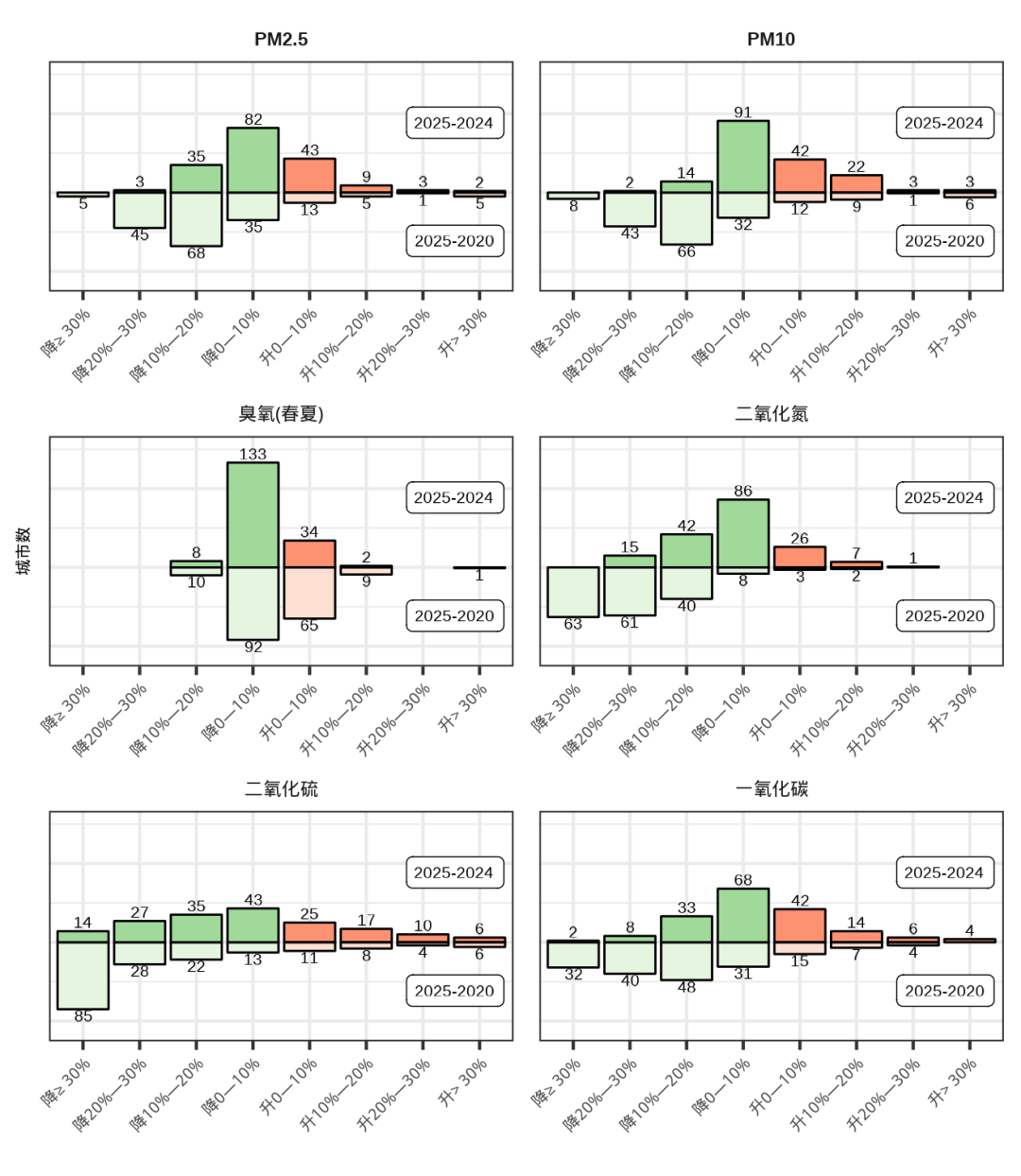
Grouped frequency histogram showing the reduction rates of six pollutants across the "4 municipalities plus 173 cities" in 2025, compared with the pollutant concentrations in 2020 (light-colored bars) and 2024 (dark-colored bars)

