Invited Talks
After the opening ceremony, Academician Songxi Chen, Professor Niansheng Tang from Yunnan University, Professor Yingchun Zhou from East China Normal University, and Professor Wei Zhong from Xiamen University delivered invited talks. This session was chaired by Professor Xiangzhong Fang from Tsinghua University and Professor Huazhen Lin from Southwestern University of Finance and Economics, respectively.
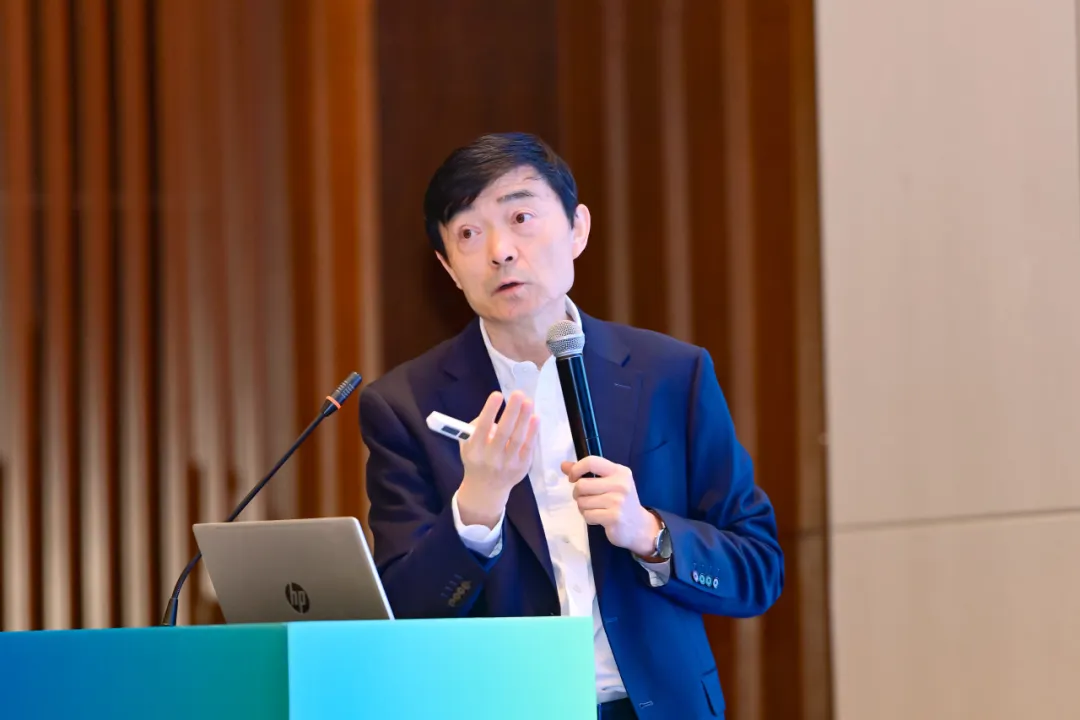
Academician Songxi Chen delivered a talk titled "Reflections on Teaching 'Introduction to Data Analysis'." In the course "Introduction to Data Analysis", he used the central theme of "from physical laws to statistical laws" to systematically elaborate on the core value of statistical thinking in understanding the laws of the world. By integrating examples from multiple disciplines, he reveals the universality and constructiveness of statistical laws. Through the analysis of classic cases, he vividly demonstrates the foundational contributions of statistics in fields such as public health, nursing, and epidemiology, thereby breaking through the traditional cognitive limitations that students and their parents may have regarding the discipline of statistics.
Academician Chen emphasized that curriculum design should focus on the "unity of knowledge and action." In the teaching process, it is essential to cultivate students' statistical intuition and interdisciplinary application abilities. By incorporating cutting-edge research cases, he demonstrated the crucial role of statistics as a "universal scientific language" in solving complex social and natural problems. He pointed out that the course is not only about teaching fundamental methods and tools for data analysis but also dedicated to shaping students' scientific thinking framework, helping them understand the regularity and uncertainty behind data. This lays a solid foundation for students to conduct data-driven research and practice in their respective professional fields in the future.
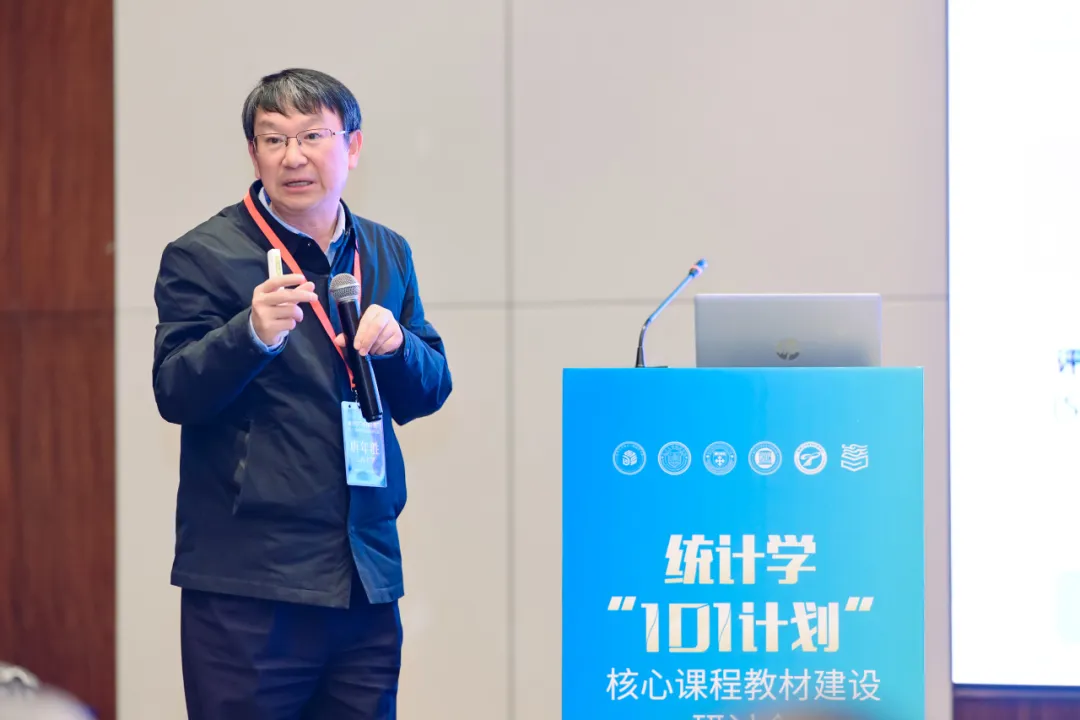
Professor Niansheng Tang delivered a talk on "The Development of Core Courses and Textbooks for Statistics Majors in the Age of Digital Intelligence: Content Restructuring and Teaching Paradigm Innovation Empowered by AI." He pointed out that against the backdrop of the Digital China strategy and the market-oriented reform of data elements, the statistics major is presented with both significant development opportunities and severe challenges in talent cultivation. He noted that current professional teaching suffers from a "triple disconnect": a disconnect between theoretical teaching and practical application, an imbalance between tool operation and ethical cognition, and a fragmentation between professional education and ideological and political education. Concurrently, students' abilities exhibit a "three-dimensional imbalance": fragmentation at the basic cognitive level, weakness at the intermediate practical level, and ambiguity at the advanced value judgment level.
To address the aforementioned challenges, Professor Tang proposed leveraging AI empowerment to advance the development of core courses and textbooks. In terms of curriculum development, he emphasized a "three-level progression, two-way integration" approach, which deeply integrates traditional statistical theory with machine learning knowledge while focusing on enhancing problem-solving capabilities in industry scenarios and cultivating intelligent statistical thinking. Regarding textbook innovation, he advocated for a shift from "static carriers" to "dynamic intelligent learning companions," aiming to construct a new form of intelligent textbook system featuring evolvable content, interactive learning, customizable pathways, and embeddable assessments. In terms of teaching paradigm innovation, the focus is on the interaction of the "three-style classroom"—an integrated classroom for fragmented knowledge, a project-driven classroom based on real-world scenarios, and a value-chain connected classroom—to bridge different cognitive levels and stimulate student interest. Building on this foundation, a four-step progressive construction process of "Investigation—Curriculum—Practice—Summary" is established to promote the continuous iteration of course content and the enhancement of teaching effectiveness. Professor Tang emphasized that AI empowerment is not merely the application of technological tools but an opportunity for the systemic reconstruction of statistics education, steering professional training from "formula derivation" toward "problem-solving," and cultivating versatile statistical talents equipped with data skills, industry knowledge, and ethical responsibility.
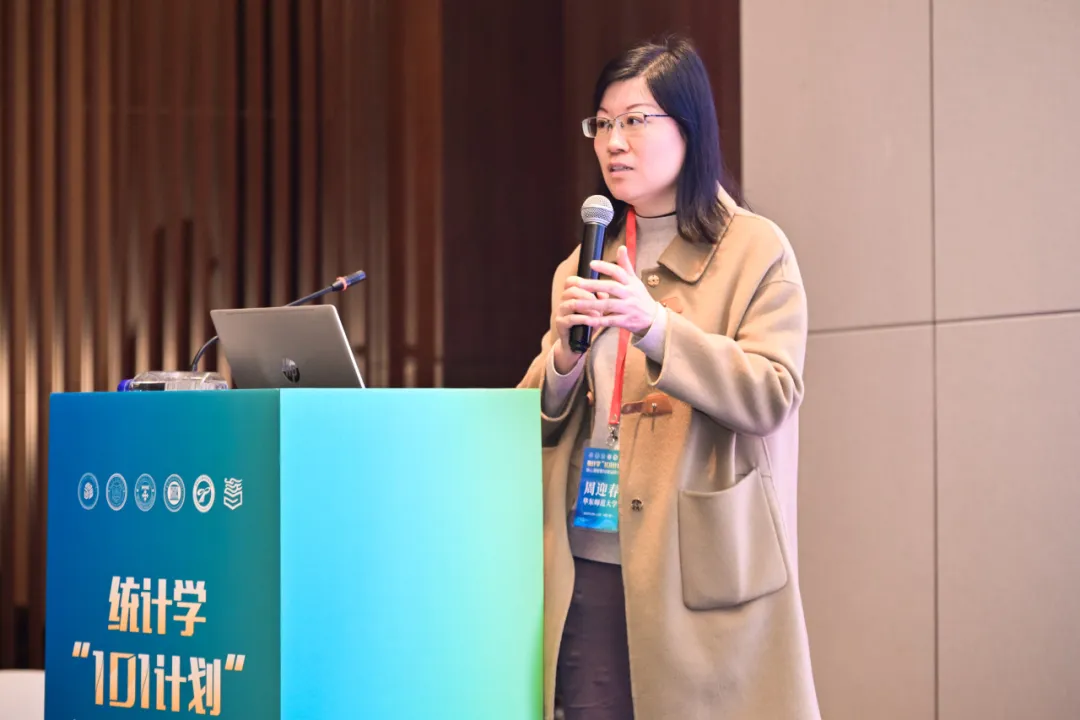
Professor Yingchun Zhou delivered a talk on "Practice and Reflections on AI-Empowered Statistics Course Teaching." Professor Zhou systematically explored the transformation pathways of teaching models in the era of artificial intelligence, emphasizing that teachers should shift from being knowledge transmitters to classroom organizers. By designing new types of assignments and evaluation mechanisms, she advocated for the coordinated development of students' deep learning and innovative abilities. In terms of constructing new-form classrooms, a blended teaching design spanning pre-class, in-class, and post-class activities should be implemented to deeply engage students in the learning process. Additionally, regular "AI-guided learning" sessions can be introduced to enhance students' critical thinking and proficiency in using technological tools
Professor Zhou further shared her experience in developing an intelligent teaching platform based on the "knowledge graph—AI learning companion—scenario simulation" framework. Through customized intelligent agents such as industrial scenario simulations and programming tutors, the platform provides students with personalized and immersive learning support. She emphasized that the core of teaching innovation lies in teachers actively designing instruction, guiding students in the appropriate use of AI, and establishing a scientific and transparent evaluation mechanism throughout the process, ultimately achieving the critical transformation from "teaching knowledge" to "cultivating competence."
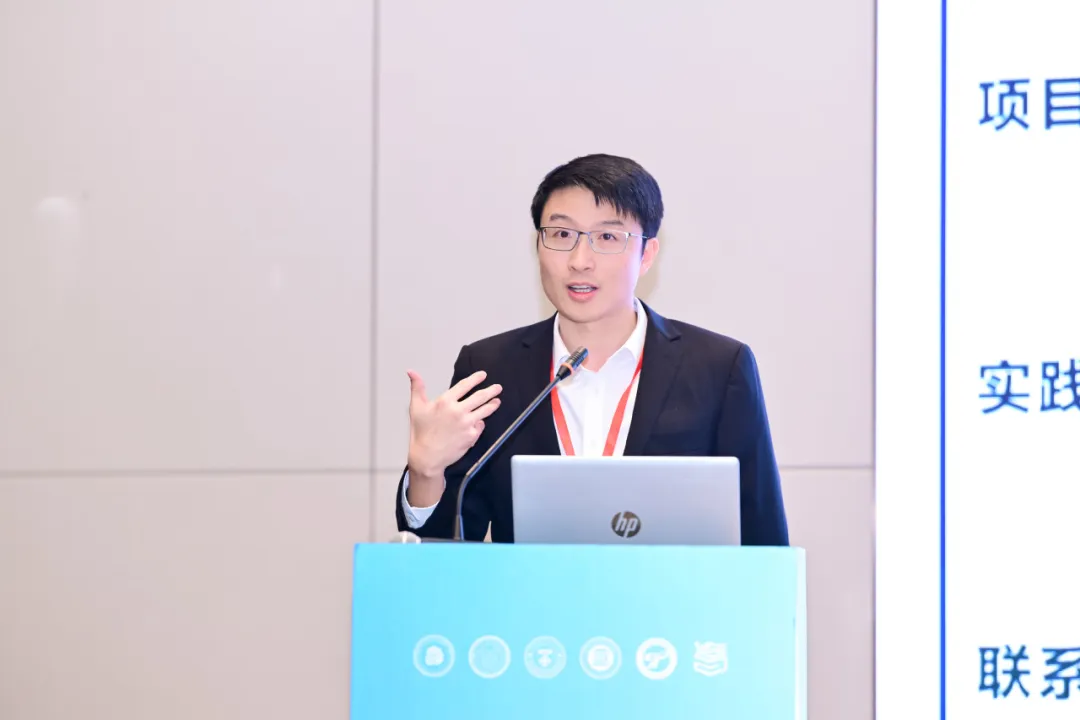
Professor Wei Zhong delivered a talk titled "Reflections on Project-Based Learning in Statistics Courses in the Age of AI." In an era where artificial intelligence is profoundly reshaping the educational landscape, Professor Zhong, drawing on his cutting-edge insights into statistics education, proposed a curriculum reform path centered on Project-Based Learning (PBL). He pointed out that large language models have made access to knowledge unprecedentedly convenient, and the traditional teaching model focused on imparting knowledge points can no longer fully reflect the value of the discipline or leverage the role of educators. Statistics education in the future should aim to cultivate interdisciplinary talents who understand the underlying logic of theories and can apply them to solve complex real-world problems.
To this end, teaching must shift from "knowledge transmission" to "competency construction." Instead of directly providing formulas and definitions, teachers should guide students to explore the fundamental ideas of statistics through carefully designed questions. At the same time, teaching needs to be deeply integrated with real-world contexts, encouraging students to combine their personal interests with statistical methods. Through the process of completing specific projects, students can integrate interdisciplinary knowledge and hone their practical skills. Professor Zhong emphasized that the role of teachers is transforming from the sole transmitters of knowledge to guides in student development and designers of the learning ecosystem. In the face of students' growing capacity for autonomous learning, the core responsibility of teachers lies in helping students construct systematic knowledge frameworks and connect them with their long-term career plans. Furthermore, teaching content and methods must undergo continuous iteration to ensure that education can effectively respond to market transformations and talent demands in the AI era, allowing statistics education to sustain its vitality amid ongoing change.

