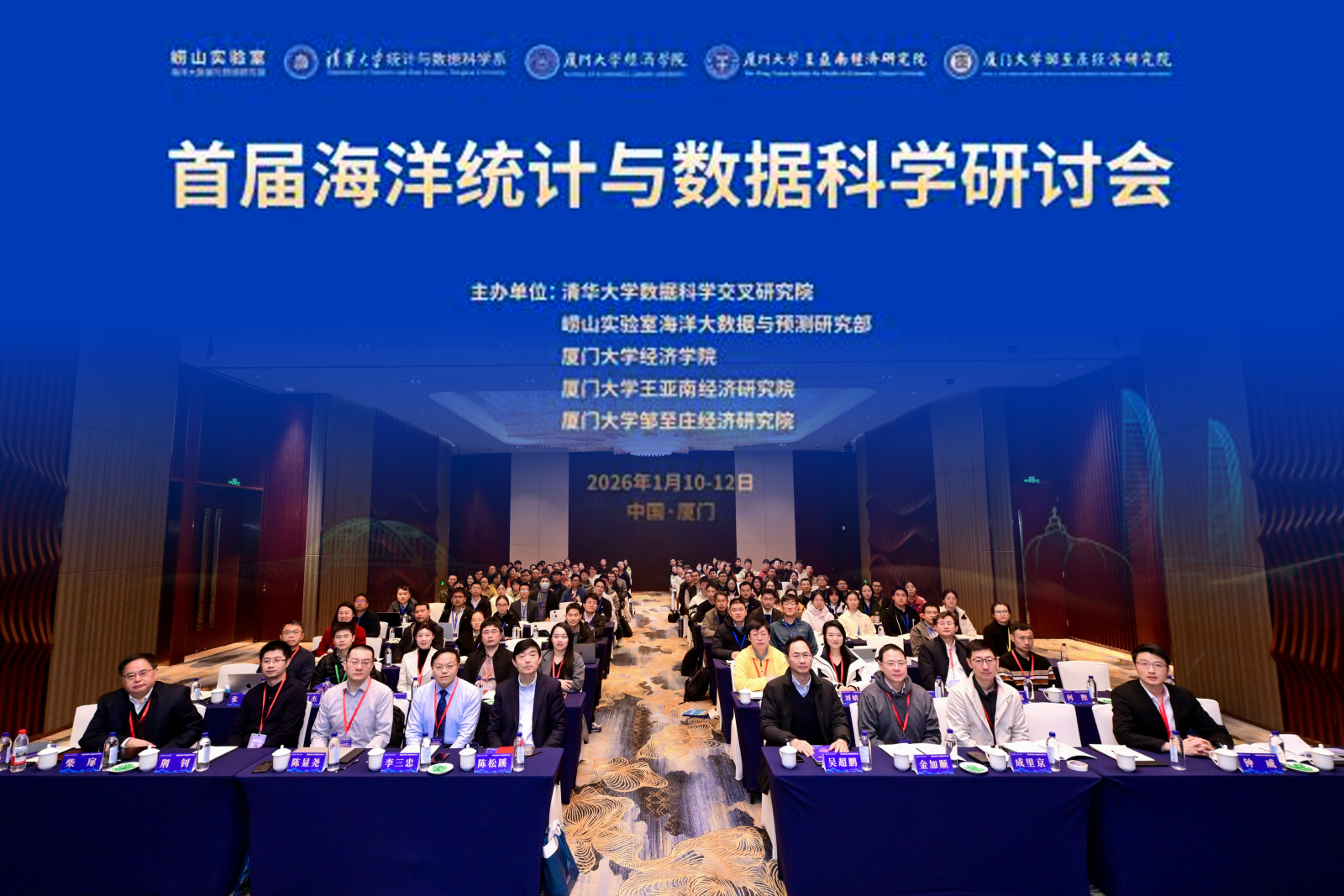
On January 11–12, the First Symposium on Marine Statistics and Data Science was held in Xiamen. Nearly 160 experts and young scholars from universities and research institutions nationwide, specializing in marine statistics, data science, and related fields, attended the conference. The symposium featured 18 keynote presentations, with participants engaging in exchanges and discussions on frontier topics including data fusion and digital twins, climate change and tipping processes, and remote sensing data processing and analysis.
On the morning of the 11th, the opening ceremony was held. Wu Chaopeng, Party Committee Standing Member and Vice President of Xiamen University; Chen Songxi, Academician of the Chinese Academy of Sciences and Dean of the Institute for Interdisciplinary Data Science at Tsinghua University; and Jing Zhao, Deputy Director of the Marine Big Data and Prediction Department at Laoshan Laboratory, delivered opening remarks. The ceremony was presided over by Professor Zhong Wei of Xiamen University.
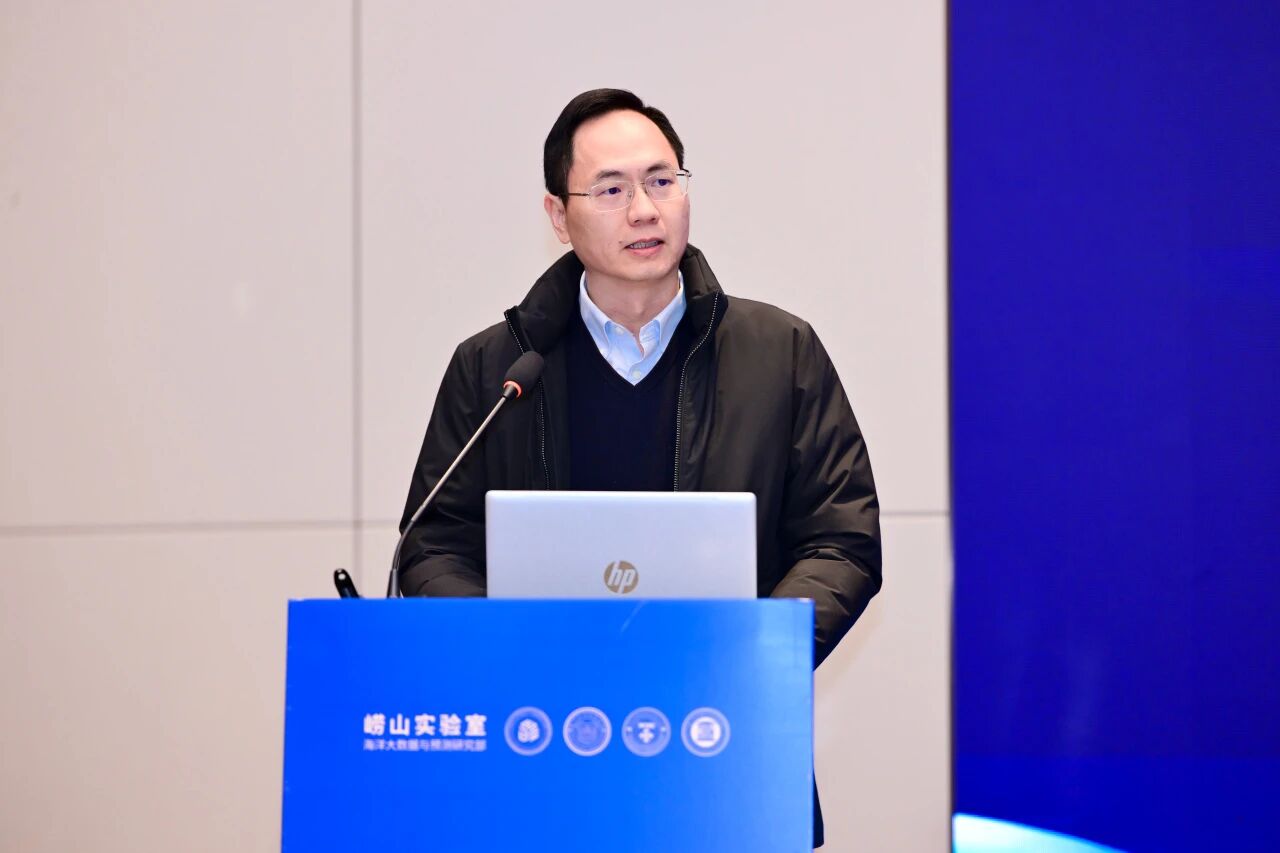
Wu Chaopeng noted that the marine economy is becoming a new engine driving economic transformation and upgrading, while precise statistics and intelligent analysis serve as crucial keys to activating this engine. With strong interdisciplinary integration and collaboration between its marine and statistics disciplines, Xiamen University has proactively aligned with national strategies, conducting a series of forward-looking research initiatives in recent years on marine economic accounting and marine ecological environment monitoring statistics. Taking this symposium as an opportunity, Xiamen University will intensify efforts in talent cultivation and scientific research in marine data science, actively participate in the construction of the national marine big data platform, and contribute Xiamen's strengths to improving the marine economic statistical system and advancing the building of a strong maritime nation.
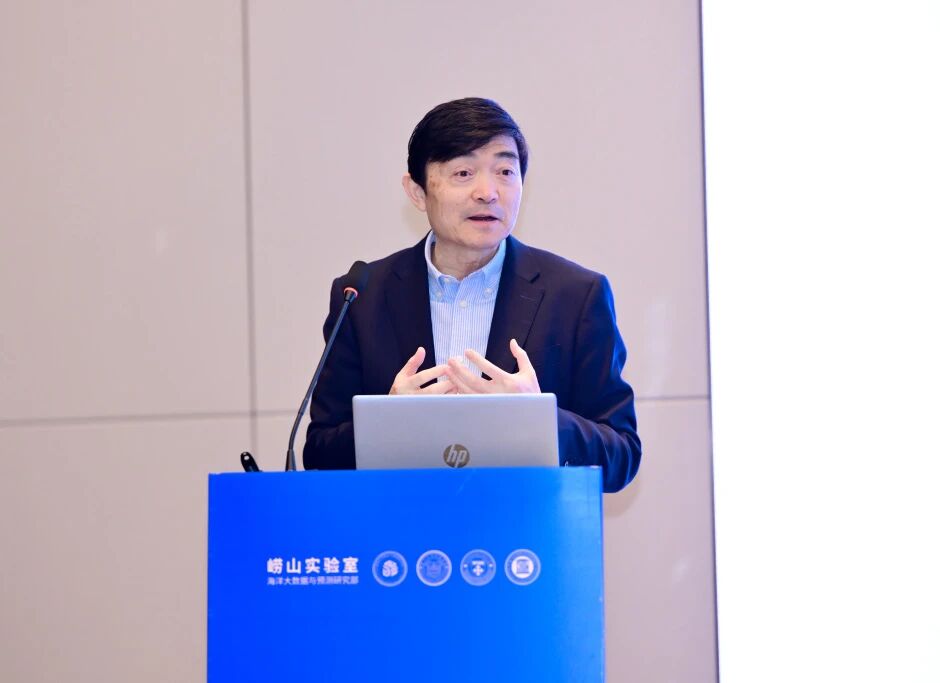
Chen Songxi expressed his gratitude to Xiamen University's economics discipline for organizing the conference. Drawing upon his personal experience in marine statistics-related work and the research progress in marine science at domestic universities and research institutions, he noted that the ever-increasing volume of marine scientific data offers unlimited possibilities for statistics. He expressed his hope that more young scholars from marine science, statistics, and related fields will participate in this interdisciplinary research and achieve outstanding accomplishments in scientific projects.
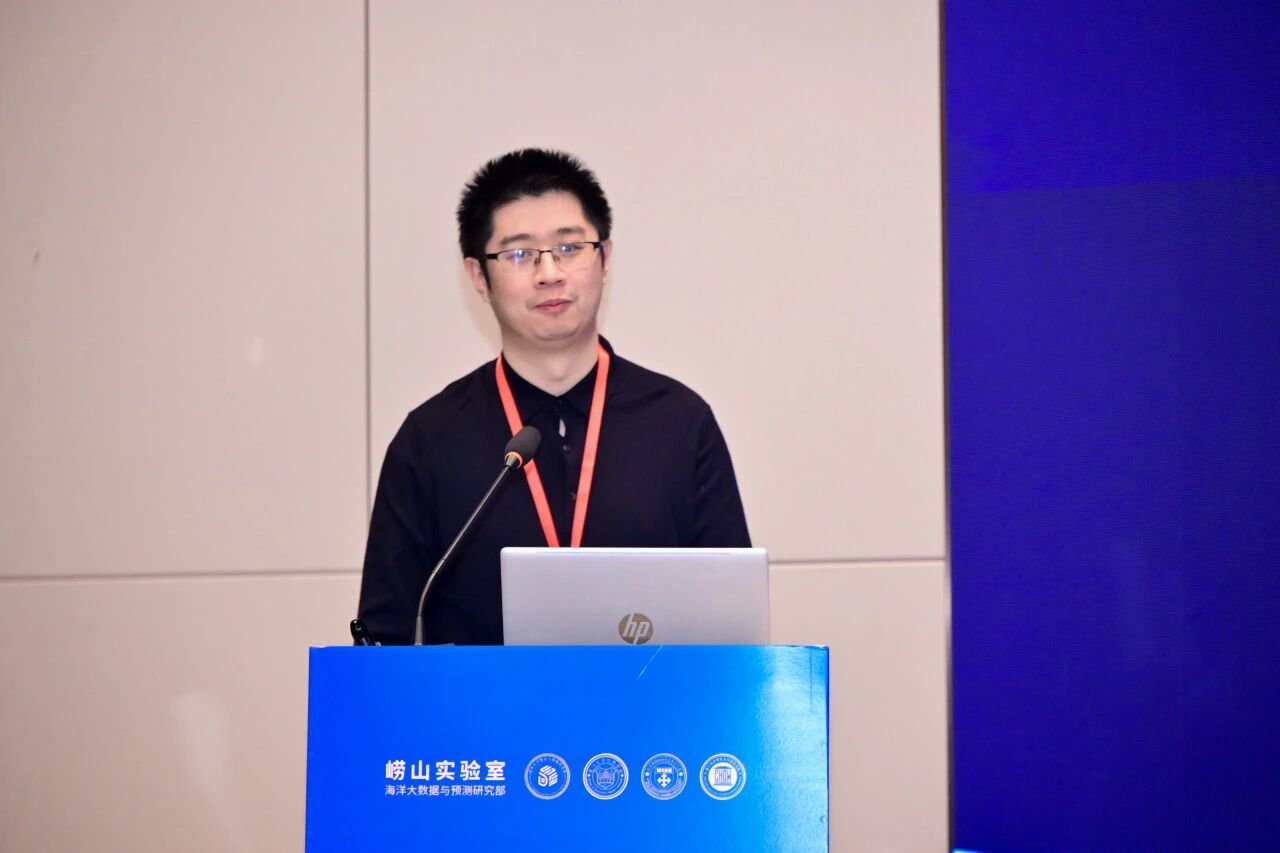
Jing Zhao stated in his remarks that the ocean, as a barrier for national strategic security and a strategic hub for high-quality economic development, is a cradle for major data challenges and encompasses complex research systems. Therefore, understanding and comprehending the ocean requires cutting-edge interdisciplinary collaboration across multiple fields. The leap from understanding the ocean to managing and developing it is substantial—from qualitative theoretical understanding to quantitative modeling and prediction, statistics and data science play a vital role in this process. He expressed his hope that this conference would consolidate academic consensus and wisdom, generating promising research ideas in this interdisciplinary domain.

