Hongwei Wang, Vice President of Tsinghua University; Shing-Tung Yau, Foreign Member of the Chinese Academy of Sciences, Member of the U.S. National Academy of Sciences, and Dean of Qiuzhen College; Yanda Li, Member of the Chinese Academy of Sciences and Professor in the Department of Automation; Jun Liu, Member of the U.S. National Academy of Sciences and Head of the Department of Statistics and Data Science; Tao Zhang, Head of the Department of Automation; and Gu Jin, Party Secretary of the Department of Automation, attended the forum. The forum was chaired by Xuegong Zhang, Professor in the Department of Automation.
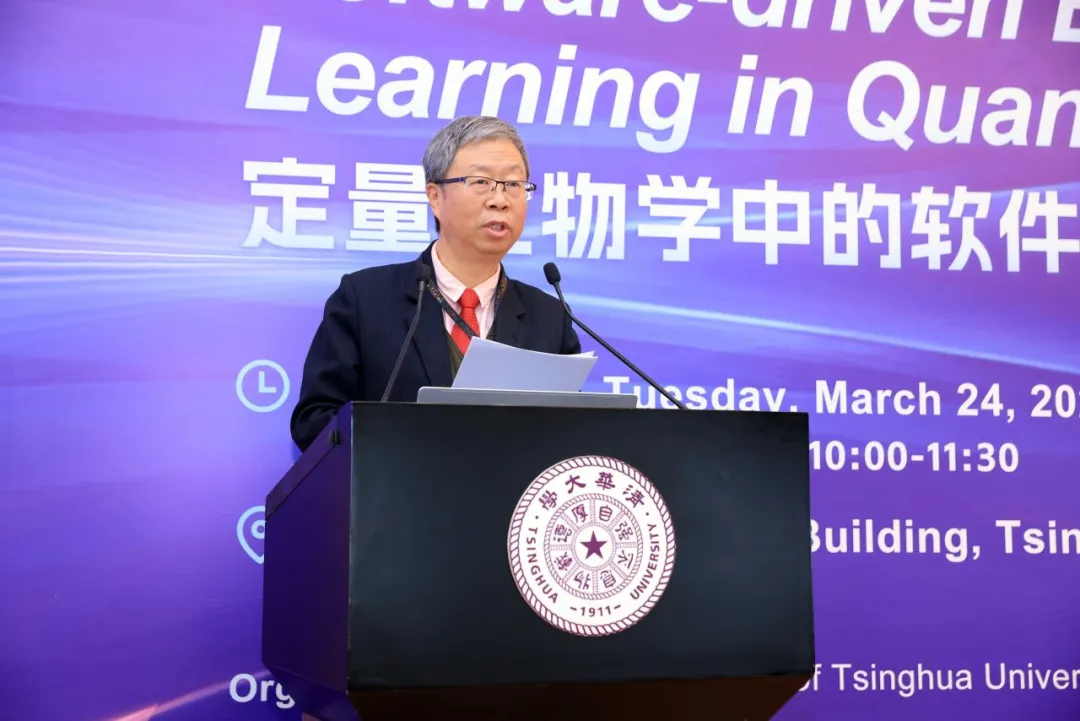
Xuegong Zhang Chaired the forum
In his remarks, Shing-Tung Yau noted that Wing Hung Wong is the first Chinese statistician to be elected as a member of the U.S. National Academy of Sciences. Having dedicated many years to the field of statistics, he has extended his work from theoretical research into experimental domains, possessing both profound theoretical expertise and solid practical abilities. Yau warmly welcomed Wing Hung Wong back to Tsinghua University, expressing the hope that he would guide the students of Qiuzhen College in conducting deep and impactful applied research, thereby contributing to the development of the discipline of statistics in China.
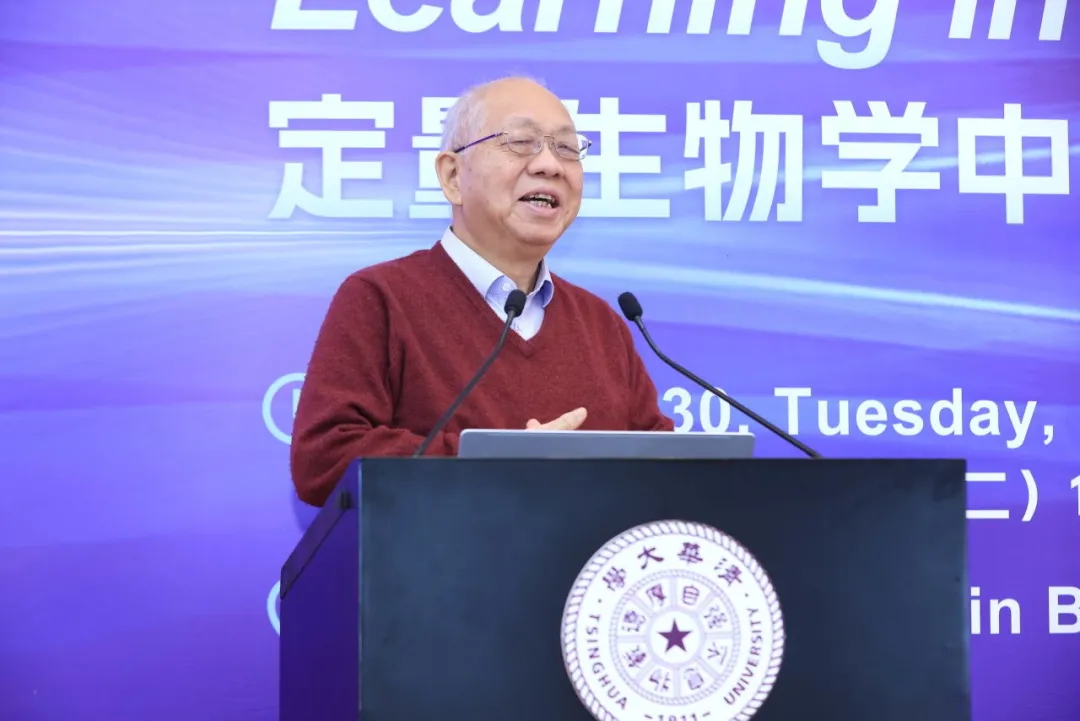
Shing-Tung Yau delivered a speech
Liu Jun noted in his speech that Wing Hung Wong is a leading scholar in the fields of statistics and computational biology. Having dedicated decades to mathematical statistics, Bayesian statistics, and related areas, he has received numerous top honors in the statistical community. His research achievements have had a profound impact on the development of modern machine learning, artificial intelligence, and computational biology. The research on software-driven experiments and closed-loop learning that he shared at this forum represents an important and innovative exploration at the interdisciplinary frontier of quantitative biology.
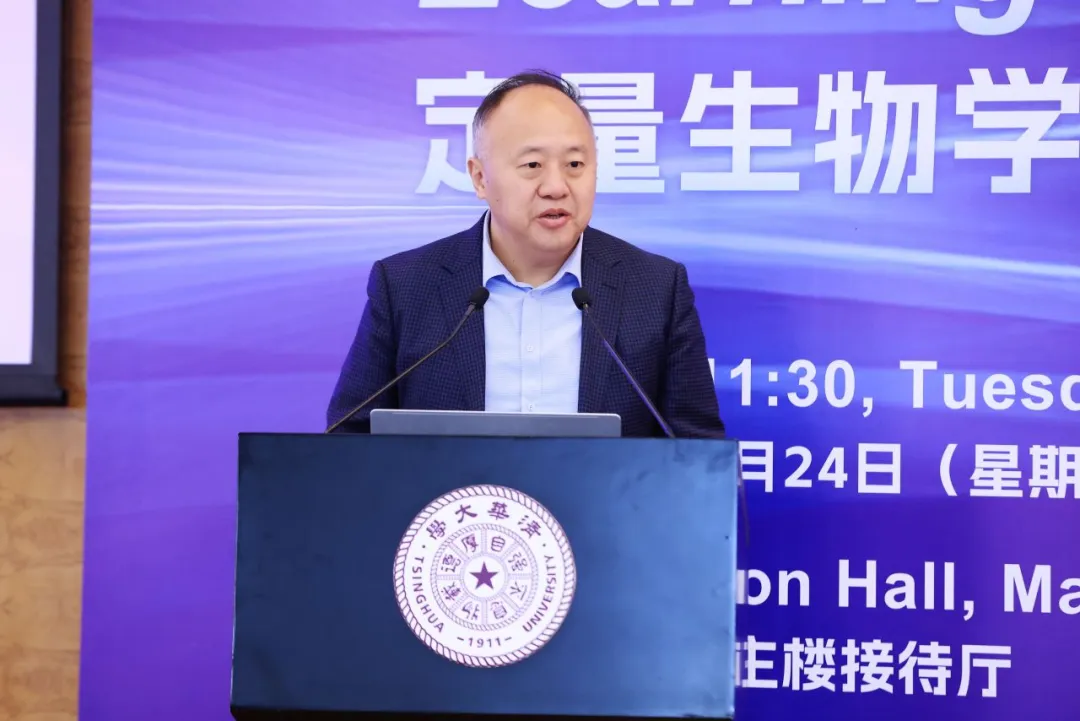
Jun Liu delivered a speech
During his talk, Wing Hung Wong pointed out that the development of quantitative biology relies on the iterative advancement of experimentation and computation: experimental analysis generates data related to biological systems, computational analysis learns mechanisms and predictive models from the data, and new experiments are then designed to validate and refine the models. With the progress of artificial intelligence technologies, the efficiency of statistical learning and scientific modeling has greatly improved, making wet-lab experimentation the key bottleneck constraining the overall development of the field. To address this, his team is developing a semiconductor-based experimental platform to conduct general-purpose wet-lab experiments in a software-defined manner, thereby helping to realize a closed-loop learning paradigm for quantitative biology research. He also shared preliminary results from this research direction and deeply explored the application prospects of software-driven experiments in the field of quantitative biology.
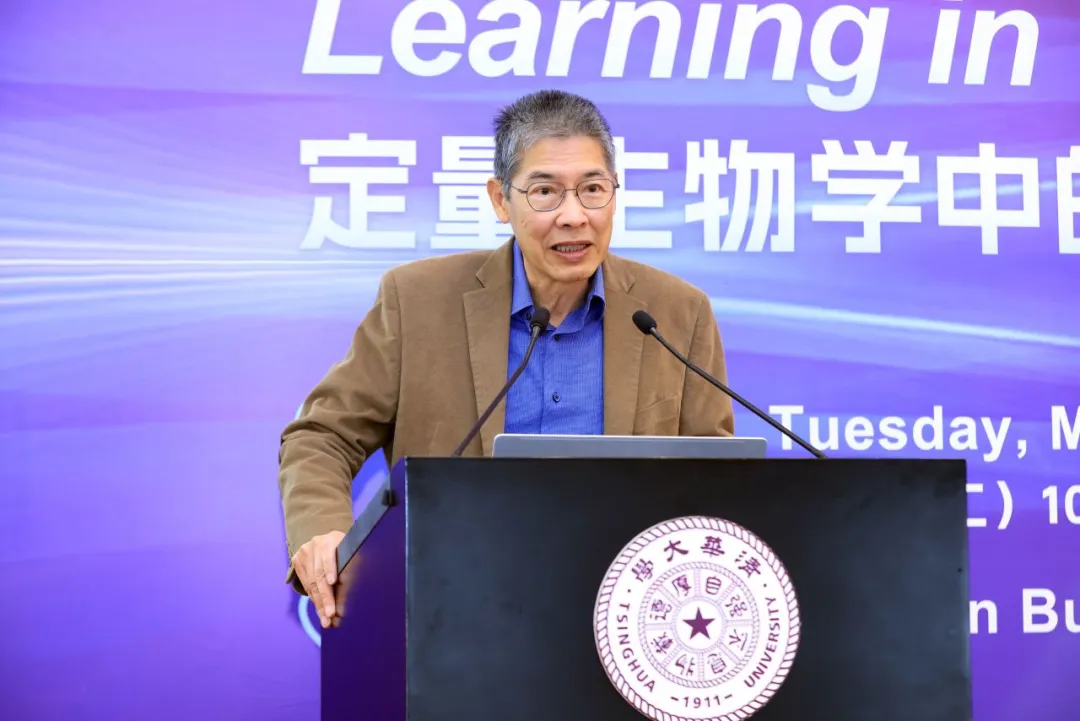
Wing Hong Wong gave the talk
During the Q&A session, faculty and students engaged in discussions and exchanges on topics such as software-driven experimental techniques in quantitative biology and the research applications of closed-loop learning. Wing Hung Wong responded to each question thoroughly and thoughtfully, and the forum maintained a strong academic atmosphere.
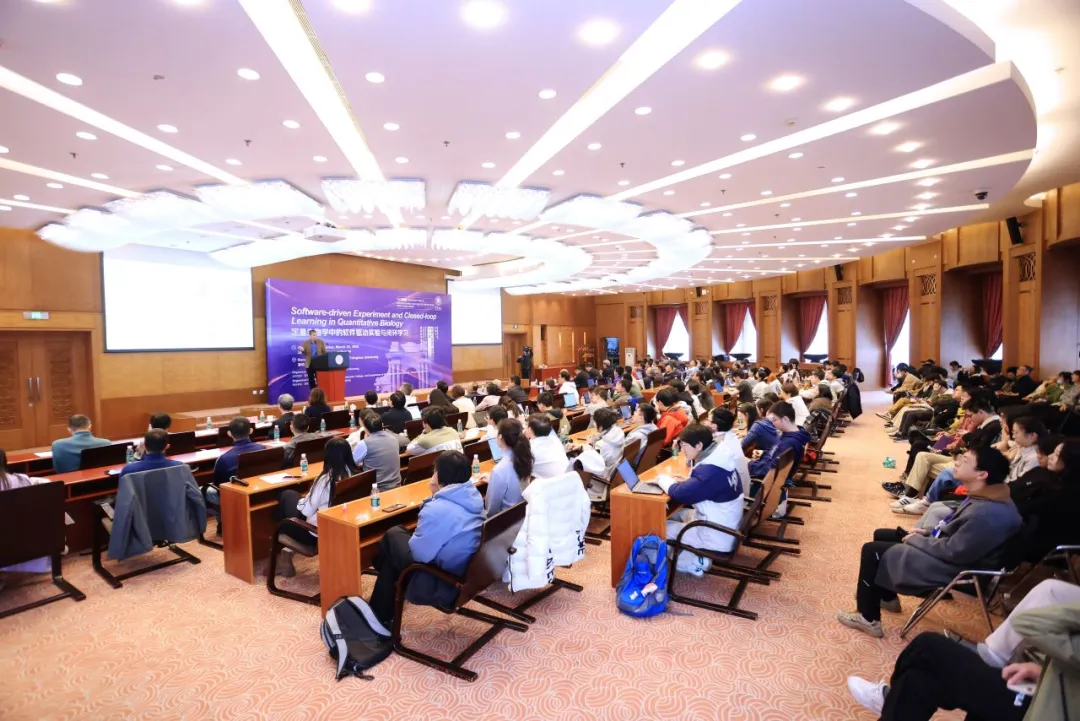
Forum Scene
On behalf of Tsinghua University, Hongwei Wang presented the "Tsinghua Forum" commemorative certificate to Wing Hung Wong.
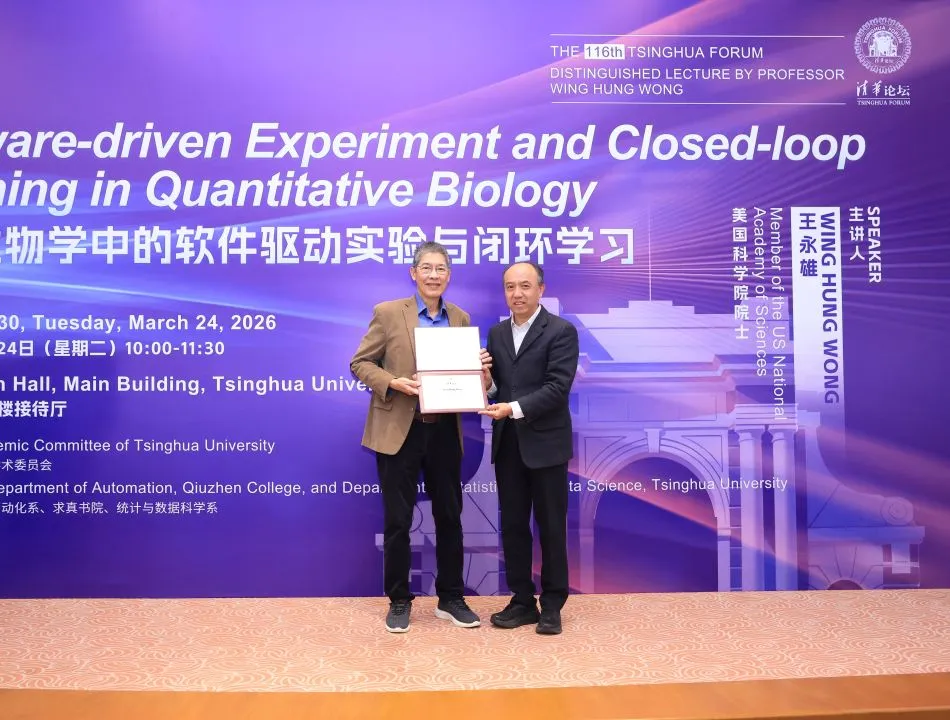
Hongwei Wang presents a certificate to Wing Hong Wong
This forum was hosted by the Academic Committee of Tsinghua University and co-organized by the Department of Automation, Qiuzhen College, and the Department of Statistics and Data Science. It attracted more than 140 faculty members and students from both within and outside the university.
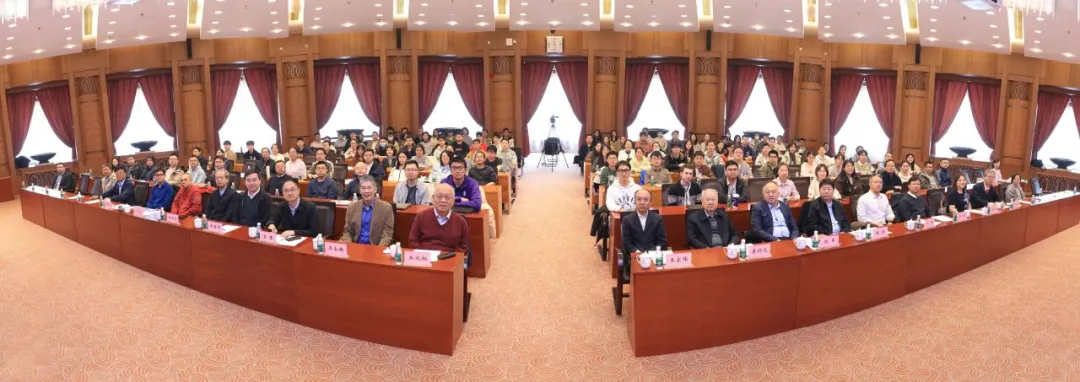
Group photo of the attendees

